

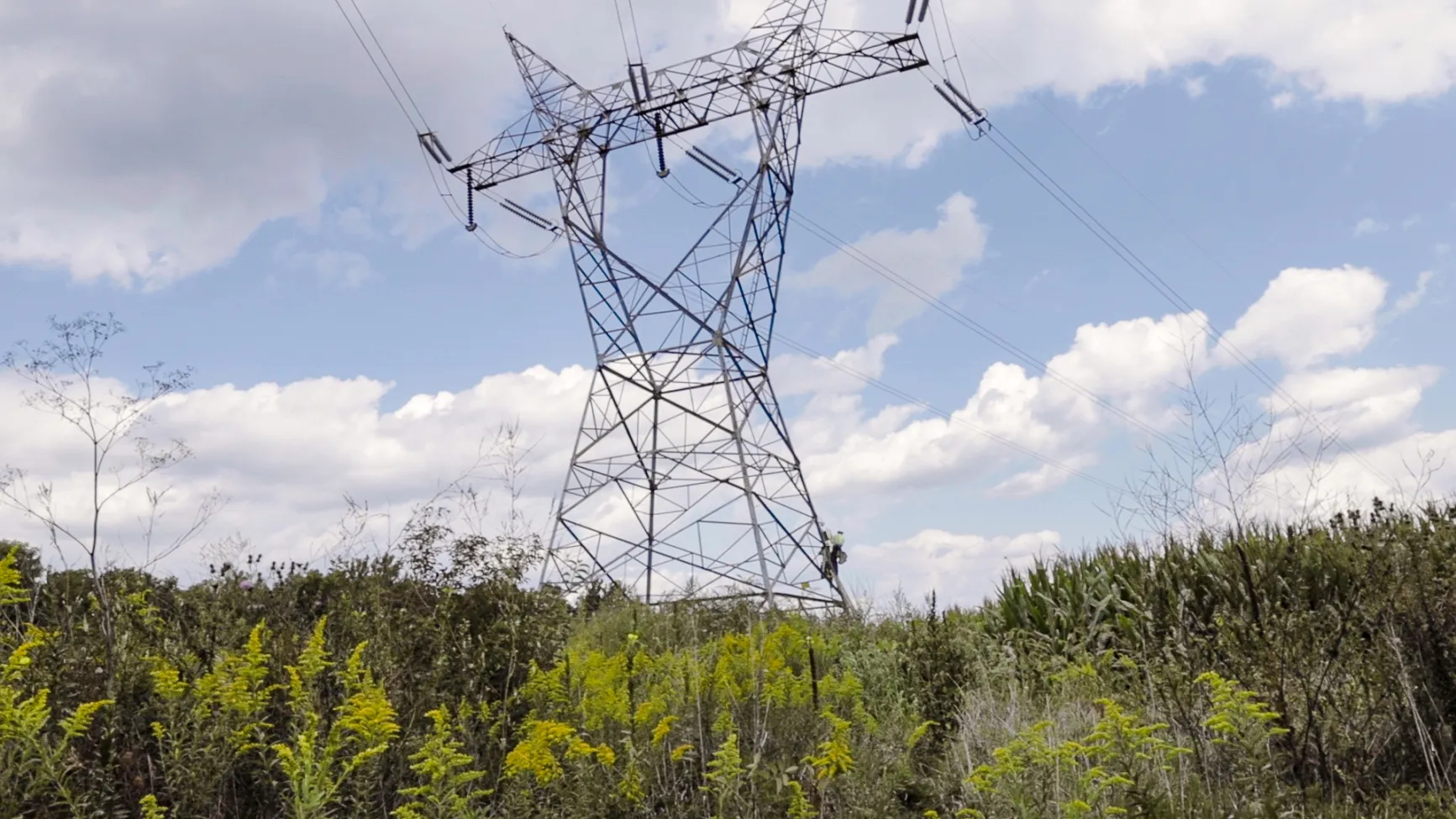
Project benefits
How this project strengthens the electric system
Another path
Gives AES Indiana more options to keep electricity moving when another transmission path is unavailable.
More flexibility
Helps reduce service interruptions during planned maintenance by allowing electricity to be rerouted.
Reliable service
Strengthens the broader electric system that homes and businesses across the region depend on.
What we’re building
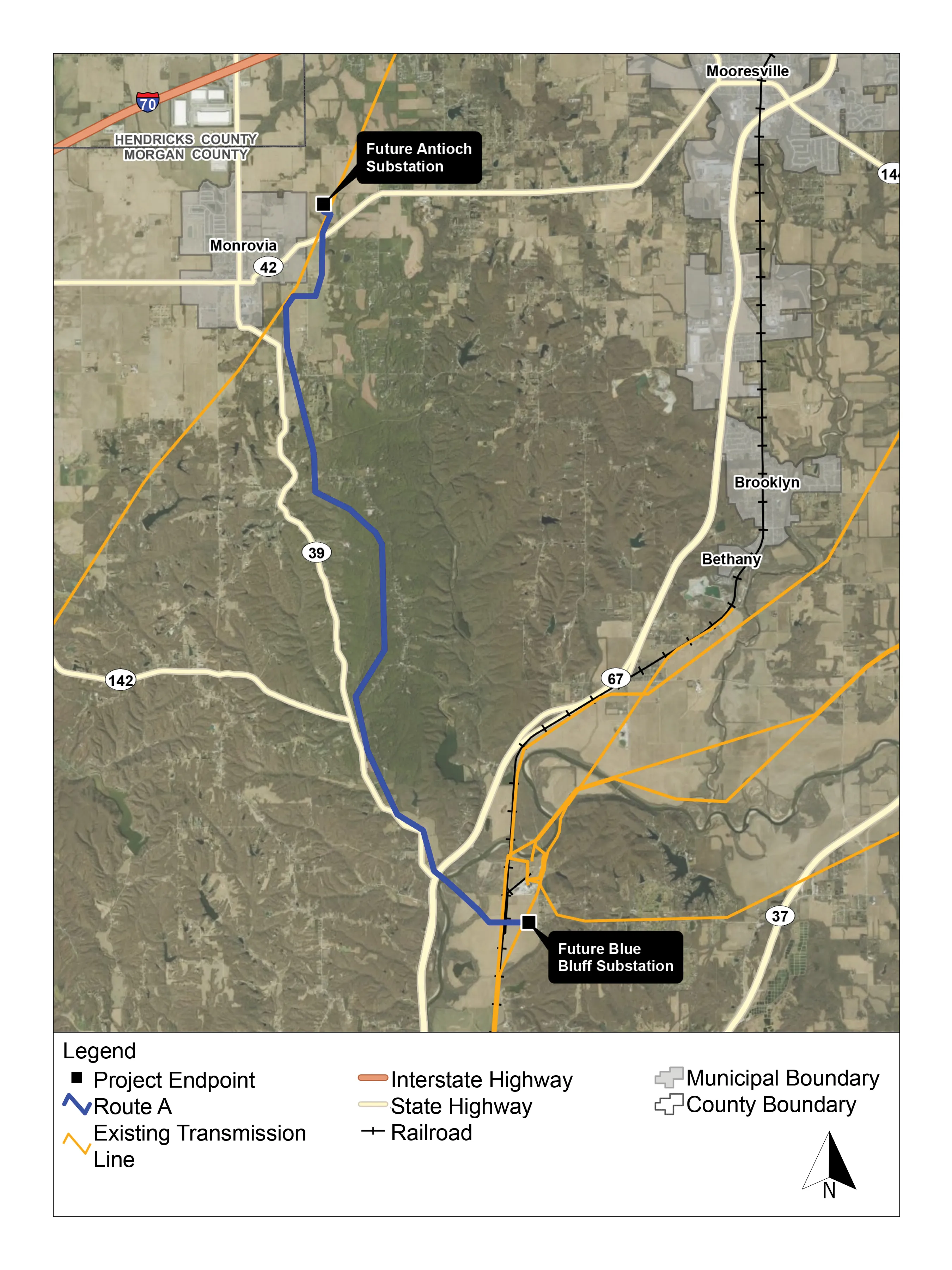
- Future Antioch Substation near Monrovia
- Approximately 10 miles of new 345-kV transmission line
- Future Blue Bluff Substation near AES Indiana’s Eagle Valley Generating Station
What happens next
With Route A selected as the preferred route, AES Indiana is moving into the next phase of project work. This includes direct outreach to affected landowners, property surveying and environmental studies, engineering and design, and right-of-way and easement discussions.
Affected landowners are being contacted directly with information about the selected route and what it may mean for their property.
Property Owner’s Guide
Affected landowners can review detailed information about surveying, easements, compensation, construction and restoration, and AES Indiana’s approach to eminent domain.
FAQ
AES Indiana has selected Route A as the preferred route for the Morgan County Transmission Line Upgrade. Route A connects the future Antioch Substation near Monrovia to the future Blue Bluff Substation near AES Indiana’s Eagle Valley Generating Station.
Route A was selected after evaluating alternatives across engineering, environmental, community, constructability, cost and property considerations. It provided the strongest overall balance across those factors.
The project creates another route for electricity within AES Indiana’s transmission system. By connecting parts of the system that are not directly connected today, AES Indiana will have more flexibility to keep electricity moving when another transmission path is unavailable because of an outage or planned maintenance. The project strengthens reliability and flexibility by creating another connection within AES Indiana’s broader transmission system.
Once built, the new connection becomes part of AES Indiana’s broader transmission network. The additional flexibility helps strengthen the electric system that ultimately serves homes and businesses across the region.
Google represents significant new demand that AES Indiana must plan to serve. But the Morgan County project is not a dedicated connection serving a single customer. Once built, the new connection becomes part of AES Indiana’s broader transmission network.
Yes. AES Indiana gathered feedback through Community Representative Forums, two rounds of public open houses, landowner conversations and other stakeholder engagement before the route decision was made.
Affected landowners will receive direct communication as AES Indiana moves into surveying, environmental review, engineering and right-of-way engagement.
Affected landowners will receive direct communication from AES Indiana or its authorized representatives explaining the selected route and next steps.
No. Surveying and environmental studies are used to gather information needed for project planning and design. Allowing those activities does not itself constitute granting a permanent transmission easement.
AES Indiana’s priority is to reach mutual easement agreements with affected landowners and avoid eminent domain whenever possible. While eminent domain is an authority available to AES Indiana, every reasonable effort is made to reach agreement with landowners before pursuing that process.
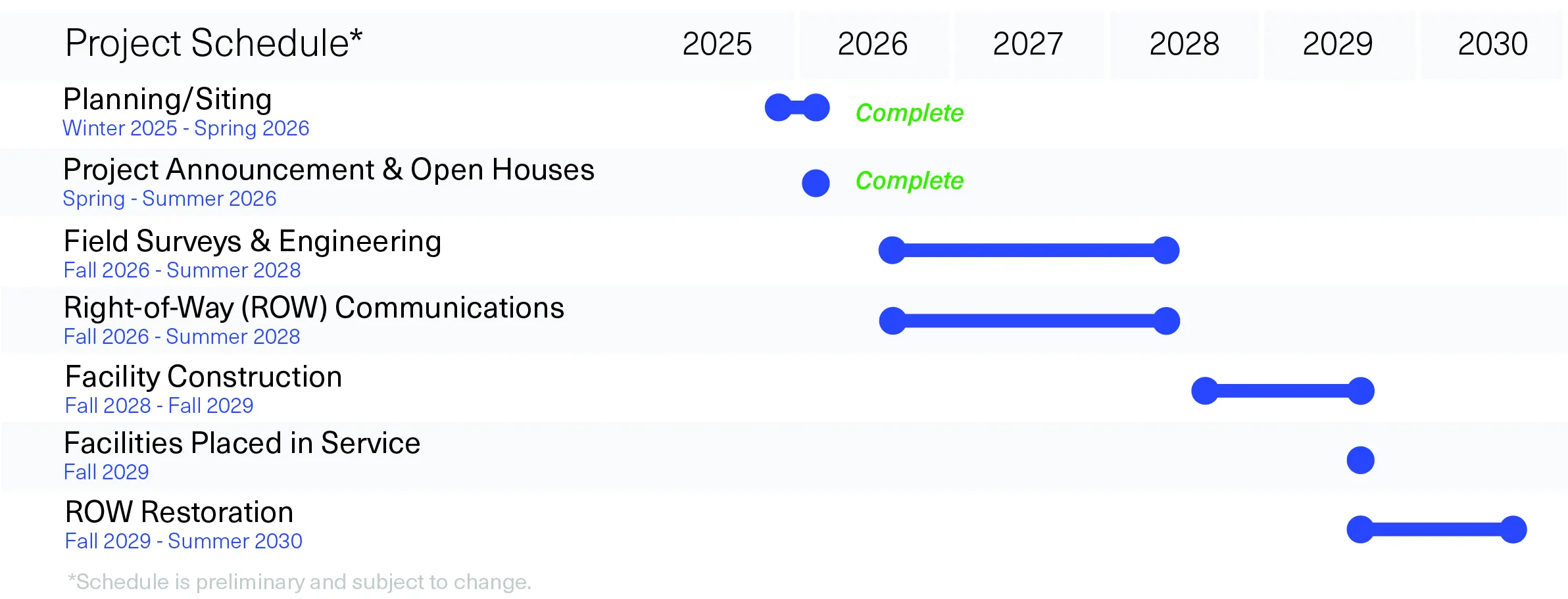
Construction is currently anticipated to begin in fall 2028, with the transmission line and Blue Bluff Substation expected to be placed in service in fall 2029.
For major transmission projects like a 345 kV line, AES Indiana installs transmission lines overhead. Overhead lines support reliable delivery of electricity while balancing performance, safety and cost. They allow for efficient inspection, faster access for repairs following storms and the operational flexibility needed to support regional energy needs. Underground lines are typically used for lower-voltage local distribution, but overhead infrastructure remains the most practical solution for long-distance, high-voltage transmission.
This project is not expected to increase rates for existing residential and small business customers. Under Indiana law, utilities follow cost-causation principles, meaning costs are tied to the customers or demand driving the need for new infrastructure. All investments are also reviewed through a regulatory process to ensure they are reasonable, necessary, and in the public interest.
Under AES Indiana’s proposed rate structure, existing AES Indiana customers would not pay for the incremental transmission investments required to serve Google’s load. Google would be responsible for 100% of the incremental generation and transmission costs required to serve its demand, including the Morgan County Transmission Line Upgrade. Those incremental costs would not be shifted to existing AES Indiana customers, even though the project will become part of AES Indiana’s broader transmission system.

About AES Indiana
- Serving 533,000 customers across central Indiana
- Approximately 16,000 miles of transmission, distribution and underground lines
- Employing more than 1,200 people
AES Indiana invests in our equipment and technology to create a stronger, safer and more efficient electrical system. We know our customers depend on us to provide the electricity they need to power their lives.